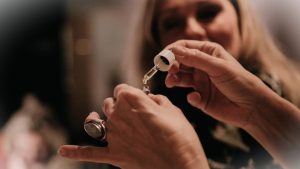
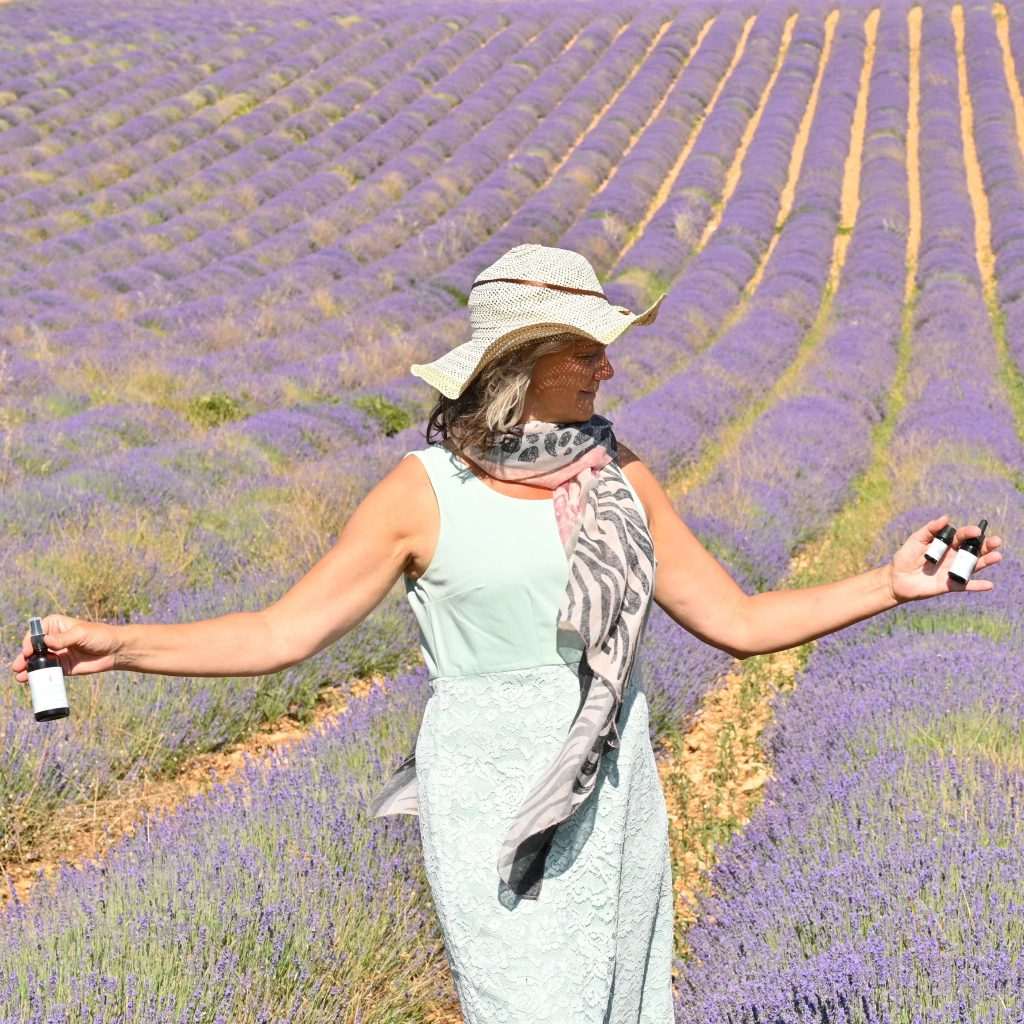
Wanneer ik een flesje lavendelolie open, ontmoet ik meer dan een geur. Ik ruik het landschap waar de plant groeide, ik voel de zon die haar bloemen verwarmde en herinner het moment dat ik over de velden dwarrelden met het gezoem van de bijen om me heen. Iedere vleug van geur verteld mij iets over de herkomst van de plant.
The essence of Lavender: Lavandula angustifolia
Van alle lavendelsoorten is Lavandula angustifolia mijn favoriet. Haar zachte licht kruidige en bloemige geur nodigt uit tot ontspanning en rust. Niet voor niets is het een veel gebruikte etherische olie in de aromatherapie.
Onderzoek laat zien dat de Lavandula angustifolia rijk is aan linalool en linalylacetaat – twee belangrijke componenten die bijdragen aan kalmerende en huidverzachtende werking. Studies tonen aan dat inhalatie of massage met deze olie kan helpen om stress te verminderen, de slaapkwaliteit kan verbeteren en kleine huidirritaties te verzachten.
"Lavender invites you to take deep breaths, offer gentle smiles, release the rush, and embrace the here and now." With love, Joanne
From flower to oil: purity in a bottle
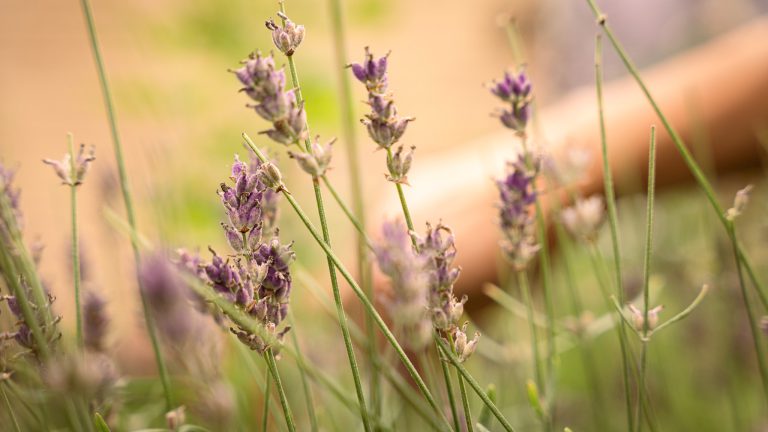
Wie wel eens langs een lavendelstruik loopt kent vast wel het verlangen om even met de hand door de arens te strijken en de geur op te snuiven. Die geur komt van duizenden microscopische klierhaartjes in deze arens, filled with aromatic molecules.
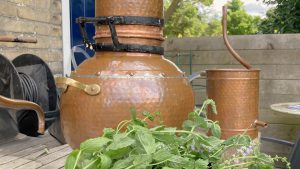
During steam distillation, these molecules are extracted from the plant material. About 80–100 kilos of flower spikes are needed to produce roughly one litre of essential oil – depending on variety, origin, and climate.
Het resultaat is een licht getinte etherische olie met een complexe samenstelling van tientallen verbindingen die samen de unieke geur en werking bepalen.


An oil with history
Lavender oil has been used by humans for thousands of years to care for body and mind.
Ancient Egypt added to balms and ritual oils for cosmetics, embalming, and purification.
Ancient Rome: used in baths and massages, blended with olive oil for cleansing, relaxation, and skin care; also to perfume linen, clothing, and homes.
Milddle Ages monasteries used lavender oil in infirmaries and apothecaries to purify air and surfaces, care for wounds, and keep insects at bay.
These ancient practices form the foundation of modern aromatherapy, where lavender oil is still valued for its calming, skin-nurturing, and purifying qualities.
Differences between lavender varieties
Not all lavender oils are the same. Their chemical composition varies by species, affecting both scent and effect:
- Lavandula angustifolia (true lavender): - soft, lightly spicy and floral scent; skin-friendly essential oil. Ideal for relaxation, sleep, and skin care.
- Lavandula latifolia (spike lavender) - higher in cineole and camphor. Its scent is spicier, often used for respiratory issues, but can be slightly irritating for the skin.
- Lavandin (hybrid of angustifolia and latifolia) higher yield with a fresher, camphoraceous scent. Common in cleaning products and perfumery, but less suitable for sensitive skin applications.
For calm, sleep, or gentle skin care, Lavandula angustifolia is the best choice – the mildest and most researched variant.
Quality and origin

The power of lavender oil is partly determined by where the plant grows. Altitude, sunlight, soil, and climate influence the concentration of active compounds in the oil. Some studies suggest that oil from higher-altitude regions often has a slightly more refined aroma profile.
For me, it remains important that essential oil comes from organically grown lavender.
Caring in this way honours everything and everyone who lives on and with Mother Nature.
Door zo zorg te dragen voor alles en iedereen die leeft op en met Moeder Natuur.
When buying a bottle, check for:
- Botanical name (Lavandula angustifolia)
- Country of origin
- Batch number or distillation date
- Organic or wildcrafted certification where possible
- Dark bottles that block UV light
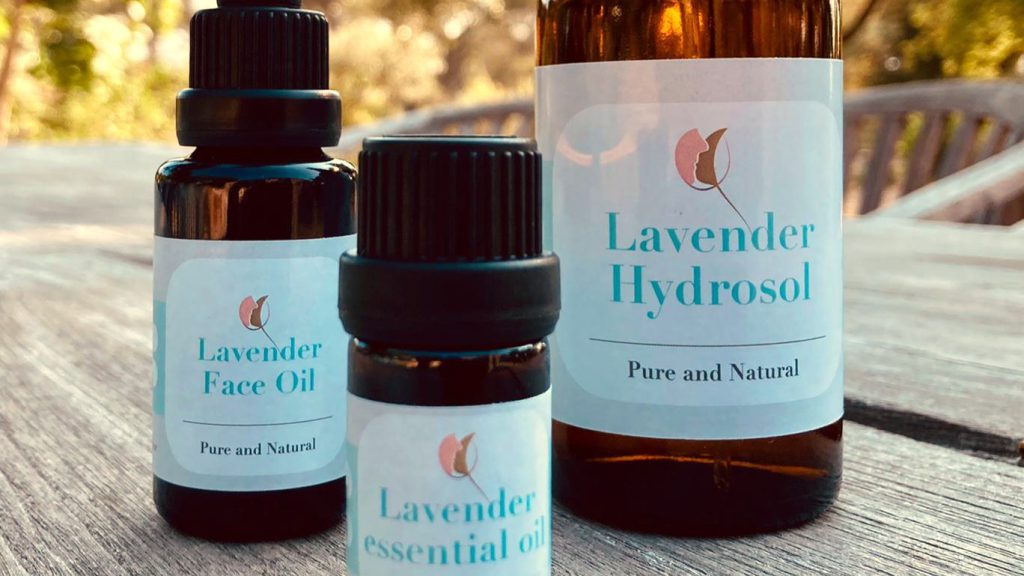
What lavender oil can do – Evidence based
Lavender oil is a complex blend of dozens of compounds, with linalol and linalylacetaat being key for relaxation and skin care. Linalool is known for its calming and stress-reducing properties, while linalyl acetate gently relaxes the nervous system. Other components, such as geraniol, lavandulol, borneol and α-terpineol, enhance skin-soothing effects, support recovery from minor irritations, and have subtle antibacterial and anti-inflammatory properties. The specific balance of these substances determines both the scent and the therapeutic effects of the oil.
Thanks to this composition, lavender oil can:
- Help the nervous system relax and reduce stress via inhalation or diffusion.
- Support sleep quality and ease falling asleep.
- Calm the skin and promote recovery from minor irritations, insect bites, or small burns, thanks to antibacterial and anti-inflammatory properties.
These versatile effects make lavender oil one of the most valuable and cherished oils in aromatherapy.

Tips for use – Simple DIY recipes with lavender oil
Here are some of my favourite ways to use lavender oil safely and effectively:
- Inhalation - 2–3 drops in a diffuser or a bowl of hot water for relaxation and calmer breathing.
- Massage Massage: 2 drops lavender oil in 10 ml carrier oil (e.g., almond oil) for a relaxing body or foot massage.
- Skin care / roll-on - Add 10–20 drops lavender oil to 10 ml jojoba oil in a roll-on. Ideal for insect bites, minor wounds, or small burns.
- Bath ritual - Mix a few drops of lavender oil with a paste of full-fat yoghurt and honey for a soothing bath.
- Sleep ritual - 1 drop of lavender oil on a cotton cloth next to your pillow. Do not drip directly on the pillow – this can be too intense.
- Body oil - Add 15–20 drops lavender oil to your favourite carrier oil, such as almond, apricot kernel, or peach kernel oil. Lovely as a nourishing body oil.
- Moment of calm / roll-on Fill a 10 ml roll-on with jojoba oil and add 5–10 drops lavender oil. Perfect to carry with you. Roll onto wrists or temples and breathe in the scent consciously when you need relaxation.
- Face oil Mix 1–3 drops lavender oil in 20 ml carrier oil. You can blend different carrier oils; my favourite is a combination of almond, macadamia, and jojoba oil
Always dilute essential oils. Test on a small patch of skin first and consult a professional during pregnancy, for young children, babies, or in case of medical conditions.
Storage and shelf life
Lavender oil lasts longer if stored with care:
- Keep the bottle dark and coolpreferably at room temperature or in a cool cupboard.
- Close the cap tightly after use to prevent oxidation.
- Unopened, lavender oil remains stable for 3-5 years Once opened, use preferably within 2-3 years for the best aroma and effectiveness.
If the oil smells sharp or unusual, or if its colour changes, do not use it.
Wisdom in scent
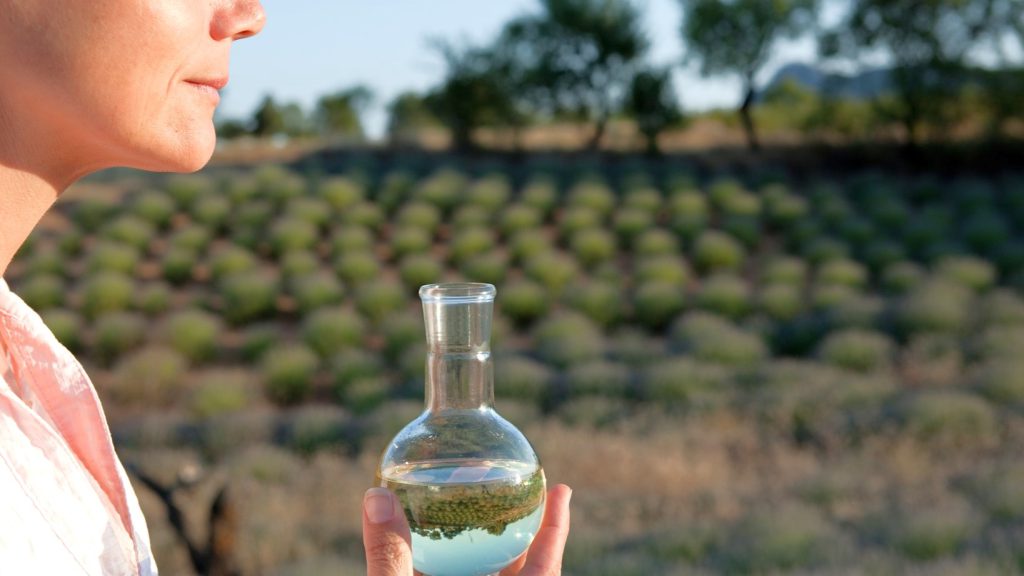
Destilleren heeft mij geleerd dat olie naast het fysieke extract van een plant ook een drager is van informatie en energie. Lavendelolie nodigt uit om stil te staan, om in het hier en nu te zijn, om te ontspannen. Iedere vleug van geur herinnert ons eraan dat we rust mogen toelaten.
Connect eens bewust met geur en ervaar wat het jou te geven heeft. Wat betekent lavendel voor jou. Neem een lavendel flesje in je hand. Adem een aantal keren diep in en uit. Draai het dopje ervan af en laat de geur heel langzaam tot je komen. Zodra je de geur ruikt…voel en ervaar het op alle niveaus. Neem de tijd en ontdek zo de charme van verschillende lavendelsoorten en hetzelfde soort uit verschillende windstreken.
“Het ruiken van planten is een connectie van soul to soul, met een open hart mogen we de geur van de plant ontvangen en naar zijn of haar “verhaal” luisteren om zo te ontdekken wat ze ons te geven heeft. “ With love, Joanne
Are you curious about the wisdom of scents from Mother Nature…
In the workshop Beyond the Scents workshop I will guide you into the world of essential oils – their energy, their power, and their effects on body, mind, and soul.
Discover the Beyond the Scents workshop
Over de auteur
Joanne Klein Wolterink is aromatherapeut, geurspecialist en docent aromatherapie. Al meer dan 25 jaar verdiept zij zich in de wereld van aromatische planten, etherische oliën en hydrolaten. Vanuit AromaWise deelt zij haar kennis via opleidingen, workshops, lezingen, studiereizen en publicaties. Met haar koperen destilleerketel brengt zij het eeuwenoude ambacht van het destilleren tot leven en laat zij mensen ervaren wat geur met lichaam, geest en emoties kan doen.